Mechanical Design Engineer — Battery Systems & HV Integration
I design battery packs, BTMS coldplates, and HV power distribution units — carrying concepts from CAD to safety-compliant, manufacturable products. Currently building PDU architecture and coldplate systems at Coulomb Li Tech.
Mechanical design engineer working on EV battery packs, BTMS thermal management, and high-voltage electrical integration. Delivered a validated, AIS 156-compliant HV PDU architecture from concept to design, partnering directly with electrical and embedded systems teams. Hands-on with SolidWorks, AutoCAD, and ANSYS, with a foundation in CFD/FEA simulation, DFMEA, and AIS 156-compliant battery system development. Brings a Lean/Six Sigma mindset to design validation and quality improvement.
02 · Flight Record
Work Experience
Junior R&D Mechanical Engineer
Coulomb Li Tech Pvt. Ltd. — Battery Technology Company
● OCT 2025 — PRESENT
Designed the Power Distribution Unit (PDU) for HV battery packs, working closely with electrical and embedded teams to align on HV wiring architecture, circuit protection, and AIS 156 safety compliance.
Owned the mechanical design interface in a multidisciplinary program, translating thermal and electrical requirements from partner teams into manufacturable coldplate and enclosure geometry.
Optimized coolant flow rate and inlet temperature for a liquid-cooled battery coldplate in ANSYS Fluent, improving cooling efficiency and thermal uniformity for lithium-ion BTMS.
Ran static thermal simulations of battery coldplates to evaluate temperature distribution, identify hotspots, and assess thermal performance under operating conditions.
Performed static structural FEA of battery enclosures in ANSYS, verifying safety factor compliance and structural integrity under mechanical loading.
Led sheet metal fabrication of battery system components, supporting physical prototyping, assembly, and design validation — coordinating with the shop floor to keep prototypes aligned with CAD intent.
Designed and optimized mechanical components for battery pack assemblies in SolidWorks, contributing to overall system performance and manufacturability.
Quality Intern
PCA Automobiles
AUG 2023 — SEP 2023
Performed detailed quality inspections on automotive components and prepared defect analysis reports to identify recurring issues and enable targeted corrective actions.
Applied Six Sigma and Toyota Production System (TPS) methodologies to real manufacturing scenarios, building practical skills in defect reduction and process standardization.
Drove process improvement initiatives that delivered a ~20% improvement in quality team efficiency.
Collaborated with cross-functional teams to implement Corrective and Preventive Actions (CAPA), supporting Lean Manufacturing and continuous improvement on the shop floor.
03 · Research Payloads
Research & Simulation
DEC 2024 — MAY 2025
CFD vs PINNs for Airfoil Self-Noise Prediction
Developed a URANS CFD model for trailing-edge noise prediction on a NACA-0012 airfoil using the Ffowcs Williams–Hawkings (FW-H) acoustic model in ANSYS Fluent, computing Scaled Sound Pressure Level (SSPL).
Trained a Physics-Informed Neural Network on the NACA-0012 dataset — achieving under 3% error versus up to 13% variance in the CFD results.
ANSYS FluentPythonPINNsAcoustic Modelling
CLICK TITLE FOR FULL WRITE-UP →
JUL 2024 — NOV 2024
CO2-Diluted Oxy-Fuel Combustion Study
Simulated a Steady RANS model for Methane–Hydrogen fuel with 68% CO2-diluted oxidizer in a non-premixed combustion configuration, achieving under 30% simulation error — within accepted industry standards.
Found that localized flame extinction probability increases with lower hydrogen content and higher Reynolds number, informing oxy-fuel combustion system design.
A Comparative Study of CFD and Physics-Informed Neural Networks for Airfoil Self-Noise Prediction
Abstract
This project compares two approaches to predicting the Sound Pressure Level (SPL) generated by a NACA 0012 airfoil: traditional Computational Fluid Dynamics (CFD) and a Physics-Informed Neural Network (PINN). The goal was to weigh each method's accuracy, computational cost, and ability to generalize against a shared experimental dataset — the NASA airfoil self-noise database (Brooks, Pope & Marcolini, 1989).
Why it matters
Accurate self-noise prediction is central to designing quieter aircraft, drones, and wind turbines. High-fidelity CFD methods (RANS, LES, DES) are trusted but computationally expensive, which makes them impractical for rapid design iteration or real-time use. PINNs — which fold physical governing equations directly into a neural network's loss function — offer a potentially much faster alternative, but their reliability for aeroacoustic tasks like this was still an open question this project set out to test.
Methodology
CFD setup: Simulations were run in ANSYS Fluent 2022 R1 on a 9 m × 6 m 2D domain around the airfoil, across 4 chord lengths, 4 freestream velocities, and 4 angles of attack. A URANS approach with SST k–ω turbulence modelling captured the unsteady aerodynamics, and the Ffowcs Williams–Hawkings (FW-H) model handled far-field acoustic prediction. Mesh refinement (inflation layers, 0.05 mm first-layer thickness, growth rate 1.2) brought the final mesh to roughly 11.28 million elements after a 3-domain grid sensitivity study.
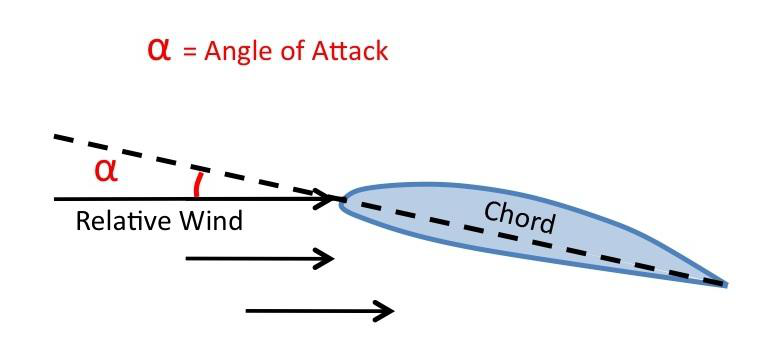
FIG. 01CFD computational domain — 9 m × 6 m with inflation-layer mesh close-up
PINN setup: Built in TensorFlow/Keras with an input layer of 5 features (frequency, angle of attack, chord, freestream velocity, suction-side displacement thickness), 3 hidden layers of 128 units with ReLU activations, and an output layer predicting Scaled Sound Pressure (SSP). The loss function combined standard data error with a physics-informed term constraining d(SPL)/df to a known theoretical relation, weighted at λ = 0.01. Training used the Adam optimizer, up to 300 epochs, early stopping (patience 20), batch size 32, on a 1,500-case dataset split 75/25 train/test.
Key results
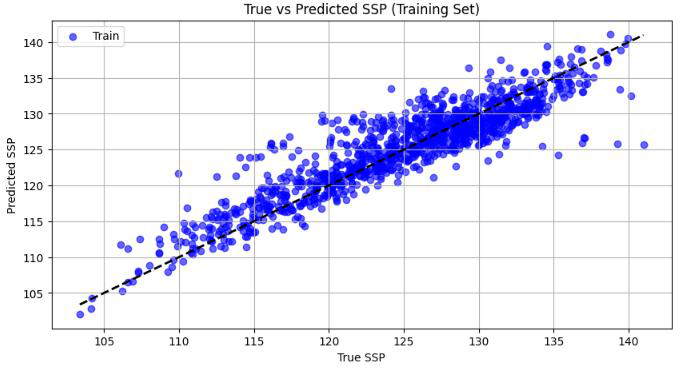
R² 0.83 / 0.77
PINN train / test score
<3%
Avg. PINN error vs experiment
up to 13%
CFD error, low-velocity cases
11.28M
CFD mesh elements
FIG. 02True vs predicted Scaled Sound Pressure — PINN training set, R² = 0.865
At low velocities (~31.6 m/s), CFD error averaged 10% (max 13%), while PINN error stayed under 2% (max 5%).
At high velocities (71.3 m/s), PINN predictions were under 1% off from experiment; CFD averaged ~3% error.
At higher angles of attack (4°), CFD systematically overestimated SSP by 3–7% — likely due to difficulty modelling flow separation at stall — while PINN error stayed under 1%.
For small chord lengths, CFD overpredicted SSP by 10–18% (probably mesh/turbulence-model related), while PINN error stayed under 4% across all cases.
Both methods showed some inaccuracy at low frequencies (200–400 Hz), where longer acoustic wavelengths are harder to resolve — but PINN stayed more consistent across the full frequency range.
Once trained, the PINN made near-instant predictions for new inputs, versus the iterative meshing and solving CFD requires — a major speed advantage for rapid design iteration.
Conclusions
PINNs matched or beat CFD accuracy across velocity, angle-of-attack, and chord-length variation, while requiring far less compute at inference time.
CFD remains valuable for certain conditions (e.g. sparse low-frequency training data), suggesting hybrid CFD-PINN approaches are a promising next step.
The physics-informed loss term was key to PINN's realistic, stable predictions, especially at extreme angles of attack.
Project · Jul 2024 – Nov 2024 · Presented at SESBT 2025, VIT Chennai
Simulation Study on CO₂-Diluted Oxy-Fuel Combustion
Abstract
A CFD study of turbulent, non-premixed jet flames burning a methane–hydrogen (CH₄–H₂) fuel mixture in a CO₂-diluted oxy-fuel oxidizer. Using ANSYS Fluent, the study replicates a physical co-flow burner experiment (Sevault et al., Sandia National Laboratories) to examine temperature distribution, regions of localized flame extinction, and species concentration under varying hydrogen content and Reynolds number.
Why it matters
Oxy-fuel combustion — replacing nitrogen with CO₂ in the oxidizer — is a key carbon capture and storage (CCS) technique for reducing greenhouse gas emissions in energy-intensive industries. But there's a shortage of computational studies that accurately reproduce the flame behavior seen in physical experiments, which limits confidence in using simulation to design next-generation turbine systems. This project aimed to close part of that gap.
Methodology
The study modelled 2 series of 3 flames each: Series A varied H₂ mole percentage (37–55%) at a constant jet Reynolds number of 15,000; Series B held H₂ at 55% while varying the Reynolds number. The coflow oxidizer was fixed at 32% O₂ / 68% CO₂ by mole, at 300 K.
Case
Mole % H₂
Fuel jet speed (m/s)
Coflow speed (m/s)
A1
55
98.2
0.778
A2
45
84.5
0.755
A3
37
75.8
0.739
B1
55
78.6
0.622
B2
55
98.2
0.778
B3
55
117.8
0.993
The computational domain was a 1.5 m cylinder (96.5 mm diameter) with a 40 mm fuel tube (5 mm inner / 5.5 mm outer diameter). The model used a Realizable k-epsilon turbulence model with scalable wall functions, second-order spatial discretization for accuracy near sharp combustion gradients, and the SIMPLE scheme for pressure-velocity coupling.
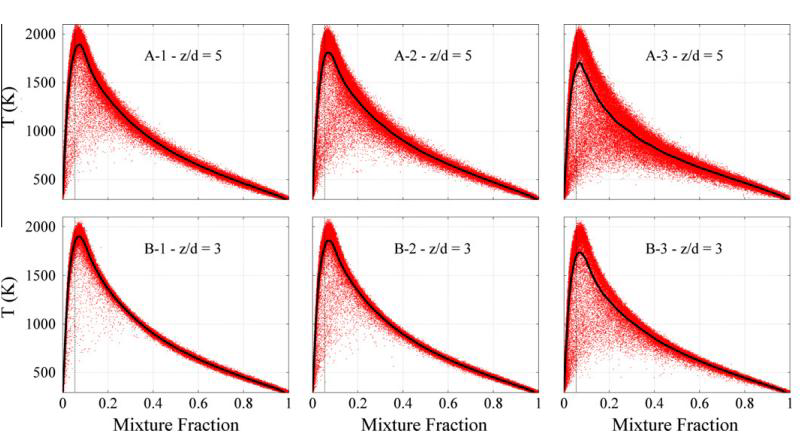
FIG. 01Temperature vs mixture fraction — A-series (H₂ variation) and B-series (Reynolds number variation)
Key results
500–1600K
Simulated extinction temp. range
600–1700K
Experimental extinction range
z/d 3–5
Critical extinction zone
~20%
Mass-fraction underprediction
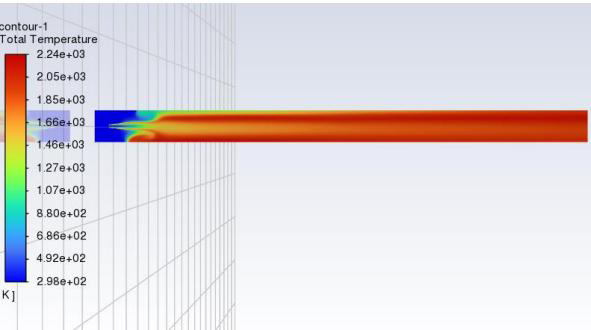
FIG. 02Total temperature contour (298 K – 2230 K) — resolved flame structure of the CO₂-diluted oxy-fuel cases
Localized flame extinction — where turbulent mixing outpaces the chemical reaction rate — occurred most often between z/d = 3 and z/d = 5 above the nozzle, consistent with prior studies (Barlow et al.).
Extinction probability increased with lower H₂ content (Series A) and with higher Reynolds number (Series B).
H₂O and CO mass fractions rose then fell with radial distance, since CO₂'s faster diffusion (versus O₂'s higher molar mass) drives it to react with H₂ to form CO and OH.
Compared to the Sevault et al. experimental data, the simulation underpredicted mass fractions by roughly 20% across radial profiles — with CO predictions underpredicting most heavily.
Maximum flame temperature shifted toward the fuel-rich side of the mixture fraction space, most pronounced near the nozzle and decreasing gradually up to z/d = 5.
Conclusions
The CFD model produced a reasonably realistic combustion simulation, aligning with real experimental data closely enough to partially validate the approach.
Both H₂ content and Reynolds number measurably affect flame stability, structure, and localized extinction behavior in CO₂-diluted oxy-fuel flames.
The CO underprediction suggests that Unsteady RANS or LES with a more refined mesh would improve accuracy over the Steady RANS model used here.